
Skip to content
OSE Galaxy
Live · 60 694 qualified actors · 153 countries

Ecosystems are cultivated. We measure how.

OSE is the scientific observatory of entrepreneurship support ecosystems — 60,500+ qualified actors across Africa, MENA, the Gulf and Europe, 14 observed quality indicators, 10+ years of longitudinal data. The evidence governments, DFIs and sovereign funds use to decide.

Scientific council: Audretsch · Sarasvathy · Stam · Chabaud · Krueger

60 694
Qualified actors
Continuously requalified
153
Countries
Africa · MENA · Gulf · Europe
14
Quality indicators
Observed across 5 layers
10+
Years of data
Longitudinal, not a snapshot
Trusted by institutions across Africa, the Gulf and Europe
Ministry of Communications & IT — State of Qatar
HEC Paris in Doha
IAE France — Institutes of Business Administration
UN Economic Commission for Africa
African Development Bank
ADALIA Institute
Scientific council

Every framework OSE publishes is reviewed by an international council of ecosystem scholars.

Meet the council
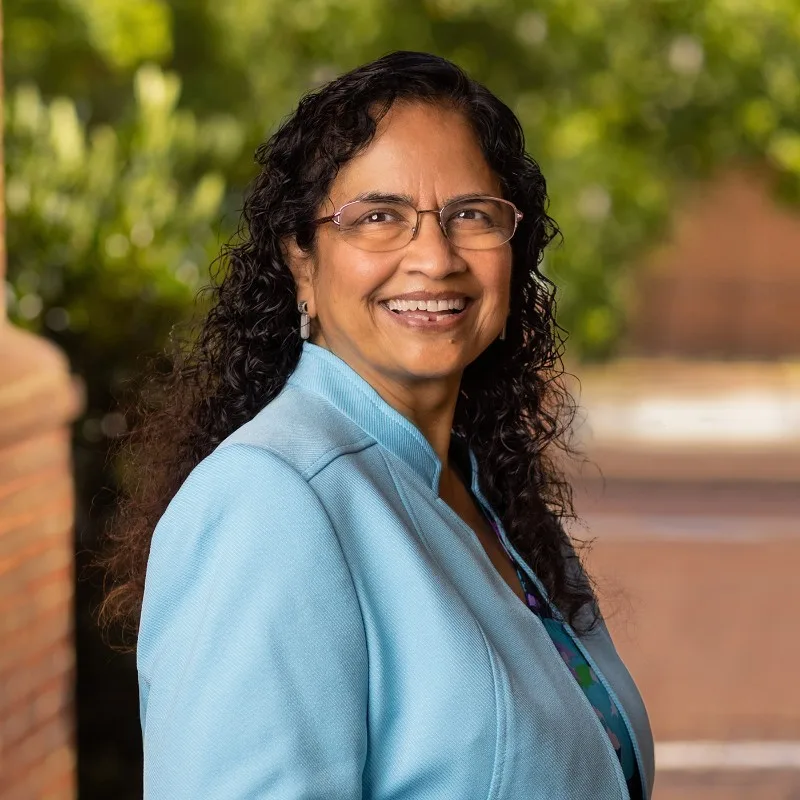
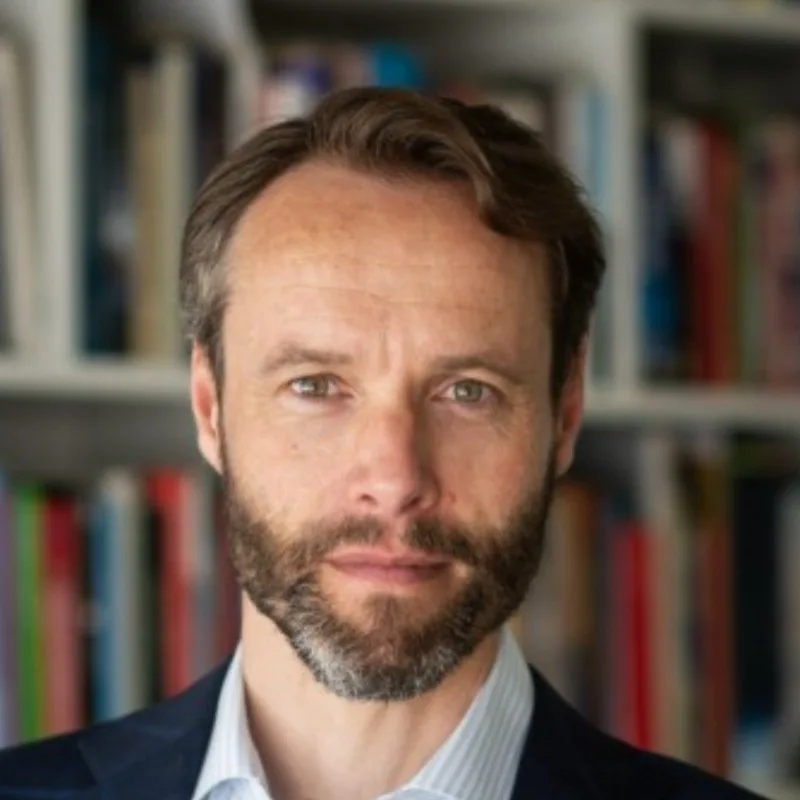
  • David B. AudretschDavid B. AudretschIndiana University
  • Saras SarasvathySaras SarasvathyDarden School, UVA
  • Erik StamErik StamUtrecht University
  • Didier ChabaudIAE Paris-Sorbonne
  • Norris KruegerScholar
Why OSE is different

Not another ranking. A measurement infrastructure.

Most ecosystem reports rest on self-declared surveys and one-off snapshots. OSE was built the other way round — and that is what makes its evidence defensible in committee.

Measured, not declared

Every actor is qualified on 14 observed quality indicators across 5 capability layers, then continuously requalified. No questionnaires, no self-assessment, no one-off survey.

Longitudinal, not a snapshot

Ten-plus years of time series. Founding cohorts and membership turnover are read as trajectories — the founding peak of 2015, 19.9 % of actors founded since 2020 — not as a frozen photograph.

Network-level, not silos

Who works with whom: Louvain communities, centrality, network density. Qatar's core density (0.146) is more than twice Saudi Arabia's (0.063) — a fact no directory can show you.

Continental scale, one framework

Africa, MENA, the Gulf and Europe under a single peer-reviewed framework — and 68.4 % of composition variance sits within countries. The module is urban, so we measure cities, not just flags.
One system, not three tools

Observe → Inform → Connect → Act — and back to Observe.

OSE is a loop, not a catalogue. The Observatory qualifies the actors; Expert turns them into decisions; Connect activates the ground; the ground feeds new signal back. Each turn makes the next one sharper.

  1. 1

    Observe

    The Observatory qualifies and tracks every support actor on 14 observed indicators — the scientific source of truth, continuously requalified.

  2. 2

    Inform

    OSE Expert turns the base into decision intelligence: atlas, diagnostics, benchmark, COTEE and gender lenses for governments, DFIs and investors.

  3. 3

    Connect

    OSE Connect matches entrepreneurs with the right structures — applications, NDA, follow-up — and returns live signal on what actually works.

  4. 4

    Act

    Better rules, better allocation, better programmes: the decisions the Observatory then measures — reading the soil before funding the content.

“Orchestrating is not conducting the orchestra — it is tuning the hall.”

The platform

One framework. Three doors.

From open public data to entrepreneur matching and decision intelligence — pick the door that fits your role. All three run on the same observatory.

B2G · B2B

OSE Expert

Decision intelligence

Live atlas, rankings, 4-tab country diagnostics, benchmark up to 6 countries, network analysis, COTEE and gender lenses, the AEEI (Stam's 10 elements). Free, Institutional, Premium, Research and VVIP tiers.

  • Free atlas, rankings and continent insights — no login
  • COTEE, gender & inclusion, AEEI country profiles
  • CSV / PNG exports, public API
Entrepreneurs · Free

OSE Connect

Entrepreneurs ↔ support structures

Find the right programme, incubator, accelerator or financing partner; apply with a real NDA; track every application. For entrepreneurs and the structures that support them.

  • Discover 60 694 qualified actors
  • Guided applications, NDA, AI assistance
  • Back-office pipeline for support structures
B2G · B2B

OSE Reports

Country & flagship reports

Strategic country reports, custom diagnostics and co-branded national reports — the full scientific output, written for the decision you have to defend.

  • Country reports off the shelf or on demand
  • Peer-reviewed methodology, citable
  • Co-branded annual national report

Advisory — Diagnosis · Roadmap · Impact

Strategic country diagnosis, ministerial instance and policy retainer, auditable impact attribution. Read the soil before funding the content, find the urban modules, couple rather than stack, institutionalise what grew.

Live insights

What the data says — today.

Each card is a live snapshot from api.ose.africa, refreshed weekly and computed with the 5-layer OSE quality model.

Saudi Arabia

GCC · 12 years of data
OSE score 475.9
667
Actors
667
Active
1 207
Connections

Largest MENA ecosystem (408 actors). Shaped by Vision 2030 giga-project logic — PIF and NEOM at top centrality. Most geographically distributed (11 cities), highest modularity (0.429) reveals distinct sub-communities.

Qatar

GCC · 14 years of data
OSE score 469.4
298
Actors
298
Active
2 106
Connections

The most hyper-connected ecosystem in the study. Qatar Foundation = single dominant orchestrator (degree 103). Core density 0.993. Governance dominance may crowd out grassroots innovation.

Live ranking

Top 10 ecosystems by actor density

Ranked by qualified actors in our database, refreshed weekly. Pulled from api.ose.africa.

1
🇳🇬
Nigeria2 886
2
🇹🇷
Turkey1 484
3
🇿🇦
South Africa1 292
4
🇺🇬
Uganda1 256
5
🇮🇷
Iran862
6
🇪🇬
Egypt829
7
🇦🇪
United Arab Emirates747
8
🇸🇦
Saudi Arabia667
9
🇮🇱
Israel609
10
🇲🇦
Morocco604
COTEE · for policy-makers

Support only pays where the rules are enforced.

The Cultivated Order Theory predicts new business creation from two things: what a country built (the gardener) and whether its rules hold (the soil). The same apparatus yields five times more where rules are enforced.

Rules weakly enforced
Rules enforced
Apparatus builders
1.3
Built support, rules weakly enforced
6.4
Built support, rules enforced
Endowment-based
1.5
Inherited endowment, rules weakly enforced
4.0
Inherited endowment, rules enforced
Predicted new business creation per 1,000 working-age adults. OSE replication on 111 countries (typology: 43 apparatus builders · 68 endowment-based; WGI 2023 rule enforcement, World Bank outcomes). Enforcement is a necessary condition (consistency 0.854). FDI effect +0.60; no effect on patents or high-tech exports.

The orchestration cycle

  1. 1
    Read the soil before funding the content
    Rule enforcement and revocable accreditation come first.
  2. 2
    Find the modules
    The unit is the urban basin, not the national envelope.
  3. 3
    Couple, do not stack
    Fund pathways, not portals; sunset clauses on one-stop shops.
  4. 4
    Institutionalise what grew
    Lock in the order that emerged, not the one that was announced.
Morocco, read through COTEE: enforcement −0.20, built support 31 %, base endowment 63 %, 21 % of actors created by the State or donors, 8 cities. Expected creation would move from 1.5 to 4.0 if rules were enforced.
The OSE Briefing

One email a month. The signals that matter.

Curated insights from our 117 ecosystems — new country reports, ranking shifts, methodology notes. No fluff, no spam, unsubscribe in 1 click.

By subscribing you agree to our privacy policy. We never share your data.

2 100+ readers14 ministries subscribed38 universities
Decide with science

Where do you want to start?

A 45-minute call to scope a country diagnosis, an institutional instance or a research licence — or start on your own with the free atlas.

Paris · Casablanca · contact@ose.africa

The OSE Galaxy

One mission, three levers: build the science and practice of entrepreneurial ecosystems in Africa.

  1. Observewhat makes ecosystems work— OSE
  2. Trainthe builders who construct them— ADALIA
  3. Advancethe science that illuminates them— EERS